75+ Starbucks And Howard Schultz Facts Most People Don't Know
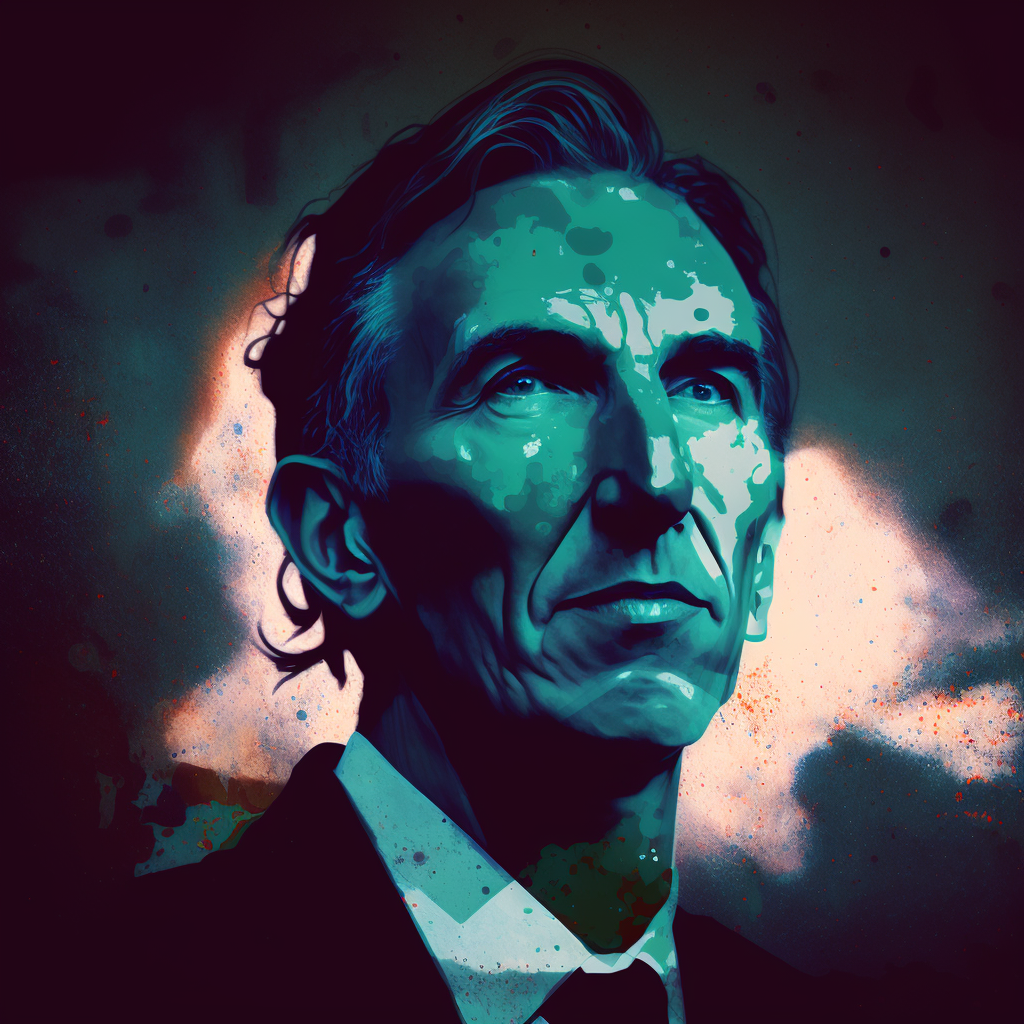
Howard Schultz grew up in Brooklyn public housing, sold his blood to pay for college, and turned a 6-store coffee chain into a 38,000-location empire. Here are 75+ facts about Starbucks and the man who built it.
Howard Schultz's Early Life
-
Born July 19, 1953 in Brooklyn, New York. Grew up in the Canarsie Bayview Houses, a federally subsidized housing project.
-
His father was a truck driver. Fred Schultz drove delivery trucks, worked in a diaper service, and held various blue-collar jobs. He never earned more than $20,000 a year.
-
His father broke his ankle on the job when Howard was 7. No health insurance. No workers' comp. No income. That moment shaped Schultz's entire approach to employee benefits at Starbucks.
-
His mother was Elaine Schultz (née Lederman). She raised three children in the housing projects.
-
Eldest of three siblings. He was the first in his family to attend college.
-
Grew up poor. He later said he felt the "shame of poverty" as a child and used sports as his escape.
-
At age 10, his mother took him to a JFK political rally. She held his hand and told him she believed in the American dream — and that he was proof it was still possible.
-
Attended Canarsie High School in Brooklyn. Graduated in 1971.
-
Earned a football scholarship to Northern Michigan University. It was his ticket out of the projects.
-
Sold his blood to help pay for college. Also worked as a bartender and took out student loans.
-
Graduated in 1975 with a Bachelor's degree in Communications. First in his family to earn a degree.
-
Spent a year working at a ski lodge in Michigan after graduation before entering the corporate world.
Pre-Starbucks Career
- Worked at Xerox after college as a salesperson. Got promoted to full sales representative quickly.
- Became general manager at Hammarplast in 1979. It was a Swedish company that made stylish drip coffee makers. He ran U.S. operations with a 20-person team.
- Noticed Starbucks was ordering an unusual number of drip coffee makers. His curiosity about why a small Seattle retailer needed so many machines led him to visit the store.
- First visited Starbucks in 1981. He walked into the original Pike Place store and was captivated by the quality and passion for coffee.
- Took over a year to convince the founders to hire him. Jerry Baldwin and Gordon Bowker were skeptical of his corporate background. He finally joined as Director of Marketing in 1982.
Building Starbucks
-
Starbucks was founded in 1971 by Jerry Baldwin, Zev Siegl, and Gordon Bowker at Pike Place Market in Seattle. It originally only sold whole coffee beans and brewing equipment.
-
The name "Starbucks" comes from Moby-Dick. It's named after Starbuck, the first mate on the Pequod. The company was almost named "Pequod" — the ship itself.
-
The Starbucks logo is a two-tailed mermaid (siren). The green color represents growth, freshness, and uniqueness.
-
Schultz's "aha moment" came in Milan in 1983. He visited Italian espresso bars where baristas knew customers by name and served cappuccinos and lattes with theatrical flair. He wanted to bring that experience to America.
-
The original Starbucks founders rejected his coffeehouse vision. They wanted to stay a bean retailer. So Schultz left in 1985 to start his own chain called Il Giornale.
-
Needed $400,000 to open Il Giornale. His wife was pregnant. He pitched 242 people. 217 said no.
-
Jerry Baldwin and Gordon Bowker eventually helped fund him. A doctor also invested $100,000, impressed by Schultz's energy.
-
In 1987, the original Starbucks founders sold the company to Schultz for $3.8 million. They wanted to focus on Peet's Coffee. Schultz renamed Il Giornale to Starbucks and began aggressive national expansion.
-
Starbucks IPO'd on June 26, 1992 on NASDAQ under ticker SBUX. The stock price has risen over 21,000% since.
-
Schultz's real estate instincts drove rapid growth. He personally approved store locations in the early years and prioritized high-traffic corners with morning commuter flow.
-
Starbucks opened its first international store in Tokyo in 1996. Analysts doubted coffee culture would work in a tea-drinking nation. It became one of their strongest markets.
Starbucks by the Numbers
- Over 38,000 stores worldwide as of 2024. Operating in more than 80 countries.
- Starbucks serves over 8 million cups of coffee per day.
- Annual revenue exceeded $36 billion in fiscal year 2024.
- Starbucks employs over 380,000 people globally. Schultz calls them "partners," not employees.
- The Pumpkin Spice Latte launched in 2003. It's generated over $1.5 billion in cumulative revenue and became a cultural phenomenon.
- Starbucks Rewards has over 75 million members across the U.S. and China. It's one of the most successful loyalty programs in retail.
- Mobile orders account for over 30% of U.S. transactions. The Starbucks app is consistently one of the most-used mobile payment platforms in America.
Schultz's Departures and Returns
-
Schultz stepped down as CEO the first time in 2000. He became chairman and focused on global strategy.
-
Returned as CEO on January 8, 2008 during the financial crisis. Starbucks was struggling — same-store sales were declining for the first time in company history.
-
Closed 7,100 U.S. stores simultaneously in February 2008 for a single afternoon to retrain every barista on proper espresso-making technique. It cost the company $6 million in lost revenue.
-
Cut 12,000 jobs in 2008-2009 as part of the turnaround. Closed 900 underperforming locations.
-
Tripled profits from $315 million to $945 million between 2008 and 2010. It's considered one of the greatest CEO comeback stories in corporate history.
-
Stepped down as CEO again on April 3, 2017. Kevin Johnson took over. Schultz became Executive Chairman.
-
Fully left Starbucks in June 2018 to explore "a range of options" — widely seen as a setup for a presidential run.
-
Returned as interim CEO a third time on April 4, 2022 at age 68. The board asked him back after Kevin Johnson retired during a period of falling morale and union pressure.
-
Served as interim CEO for about a year before handing the reins to Laxman Narasimhan in March 2023.
The New CEO Era and Recent Struggles
-
Laxman Narasimhan became CEO in March 2023. He had no prior restaurant or coffee industry experience — his background was at PepsiCo and Reckitt Benckiser.
-
Narasimhan lasted just 17 months. He was ousted in August 2024 after consistently disappointing quarterly results.
-
Starbucks poached Brian Niccol from Chipotle in August 2024 to become the new CEO. His compensation package was worth up to $113 million.
-
Niccol negotiated the right to live in Newport Beach, California and commute to Starbucks' Seattle headquarters via corporate jet — sparking public criticism.
-
Starbucks stock jumped 24% the day Niccol's hiring was announced. Chipotle stock dropped 10%. Wall Street clearly had a preference.
-
Same-store sales declined for three consecutive quarters in 2024 in both the U.S. and China. Mobile order congestion and long wait times were cited as major problems.
-
China became a major headache. Local competitors like Luckin Coffee surpassed Starbucks in Chinese store count by late 2023, aggressively undercutting on price.
Union Battles
-
The first Starbucks store to unionize was in Buffalo, New York in December 2021. Workers voted 19-8 to join Starbucks Workers United.
-
Over 400 U.S. Starbucks locations have unionized as of 2024 — the largest wave of union organizing in American fast food history.
-
Schultz was accused of union-busting. Workers alleged store closures, reduced hours, and firing of union organizers in retaliation.
-
Schultz testified before the U.S. Senate in March 2023 at the request of Senator Bernie Sanders. He denied any union-busting and called it "not who we are."
-
The NLRB filed over 100 complaints against Starbucks for unfair labor practices between 2022 and 2024.
-
Starbucks and Workers United reached a framework agreement in February 2024 to restart contract negotiations. It was the first real breakthrough after years of hostility.
-
Brian Niccol struck a more conciliatory tone on unions after taking over, signaling a potential reset in the company's labor relations.
Employee Benefits and Culture
- Starbucks was one of the first companies to offer full health insurance to part-time workers — including those working just 20 hours per week. Schultz did this because of his father's injury.
- Offers stock options to all employees. Even part-timers get "Bean Stock" — equity grants in the company.
- Launched the Starbucks College Achievement Plan in 2014 — full tuition coverage for a bachelor's degree through Arizona State University's online program.
- Over 70,000 employees have enrolled in the college tuition program since its launch.
- Schultz's ethos: "We are not in the coffee business serving people. We are in the people business serving coffee."
- Starbucks committed to hiring 10,000 military veterans and spouses by 2018. They hit the goal ahead of schedule and expanded the commitment to 25,000 by 2025.
Schultz's Personal Life
- Married Sheri Kersch in 1982. They have two children: a son, Jordan, and a daughter, Addison.
- Jordan Schultz is a sports reporter who has worked for ESPN, The Huffington Post, and various sports media outlets.
- Howard and Sheri co-founded the Schultz Family Foundation in 1996. It runs two programs: Onward Youth (helping disconnected young people ages 16-24) and Onward Military (supporting post-9/11 veterans).
- Drinks 5 cups of coffee per day. Prefers a French press espresso and a doppio macchiato. Tries to cut off caffeine after 5pm.
- His net worth is estimated at $3.5-4 billion as of 2025.
- Schultz is a Democrat. He supports same-sex marriage and has been vocal about social issues.
The Presidential Bid That Wasn't
- Seriously explored running for president in 2019 as an independent centrist candidate.
- Published the book "From the Ground Up" in January 2019 — widely seen as a campaign book laying out his life story and political vision.
- Democrats were furious. Party leaders warned an independent run would split the anti-Trump vote and guarantee Trump's reelection.
- Dropped the idea in September 2019 citing health reasons after back surgery. Many believe the hostile reception from both parties killed the effort.
Books and Awards
-
Wrote "Pour Your Heart Into It" (1997) with Dori Jones Yang — the story of how Starbucks was built one cup at a time.
-
Wrote "Onward" (2011) with Joanne Gordon — about Starbucks' 2008 near-death experience and turnaround.
-
Wrote "For Love of Country" (2014) about military veterans.
-
Wrote "From the Ground Up" (2019) — his most personal book, covering his Brooklyn childhood and Starbucks journey.
-
Named Fortune's Businessperson of the Year in 2011 for his leadership during the economic recovery.
-
Received the FIRST Responsible Capitalism Award in 2007.
-
Received the National Leadership Award in 1999 for efforts to fight AIDS.
-
Received the NAACP National Equal Justice Award in November 2017.
-
Received an honorary Doctor of Humane Letters from Arizona State University in 2017.
Famous Quotes
- "In life, you can blame a lot of people and you can wallow in self-pity, or you can pick yourself up and say, 'Listen, I have to be responsible for myself.'"
- "The currency of leadership is transparency."
- "Success is best when it's shared."
Schultz's journey from Brooklyn public housing to a $100 billion brand mirrors the kind of relentless execution you see in Tesla's marketing playbook — starting with nothing, building distribution through sheer obsession. His story also shows why the people behind the product matter as much as the product itself.
More interesting facts:
- 75+ Mark Zuckerberg Facts Most People Don't Know
- 75+ Sam Altman Facts Most People Don't Know
- 75+ Elon Musk Facts Most People Don't Know
Related articles: Tesla's Marketing Strategy · Steve Jobs Facts · MrBeast Facts
Author

Want more like this?
I write about AI implementation, automation, and growth marketing. No hype.